
Introduction
How to score better in mathematics is a common question among students preparing for exams. The key is to practise problems deliberately, understand formulas, review mistakes, and take timed practice tests. With a consistent study routine, students can improve their problem-solving skills and exam performance.To be gifted in mathematics has absolutely nothing to do with being a gifted person at all, since it totally depends on the way one studies this particular science. Two students may devote equal amounts of time to learning mathematics, but their results will differ greatly because one student studies facts mechanically, while the other one practices mathematics. This essay considers different methods of studying mathematics through regular actions that lead to good test results.
Table of Contents
1. Build a Formula Sheet That Actually Helps
A formula sheet serves much better as a thinking tool than as a memory aid. The best formula sheets are structured by topic, with an example next to each formula, not just the formula alone, and with periodic manual rewrites rather than just one-time copy-pastes. Manual rewriting makes the brain encode the information again, which helps in remembering much better than just reading already compiled sheets.
- Formula sheets should be grouped by chapters or concepts, not per order of appearance.
- In addition, next to each formula, write the conditions of usage and typical mistakes made when using that formula.
- Limit yourself to one to two pages; a long formula sheet becomes useless as a reference card.
2. Practice Problems Deliberately, Not Just Frequently
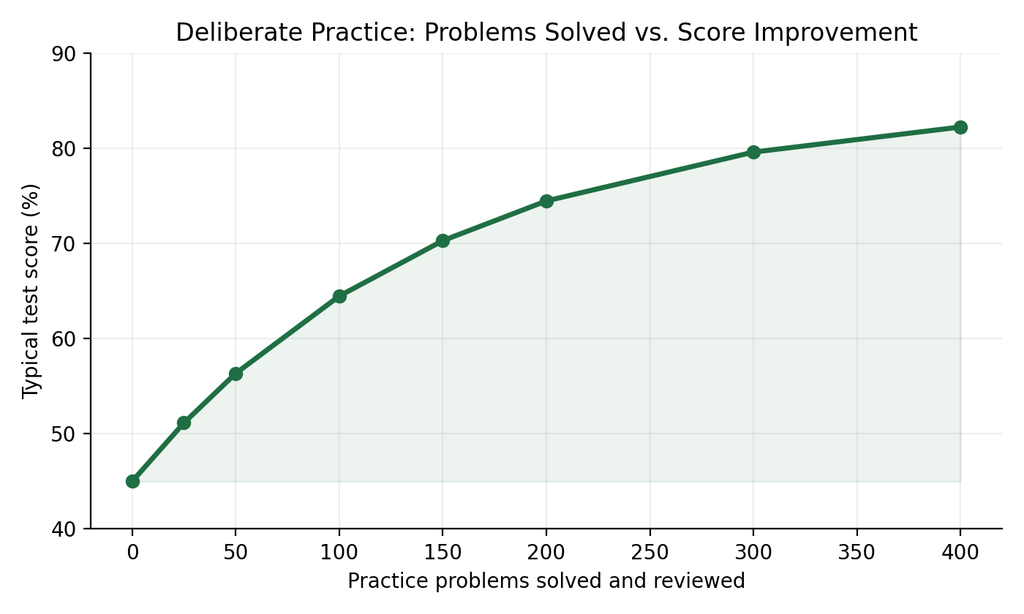
To score better in mathematics, focus on understanding the steps behind each solution rather than memorising answers. Problem solving is very important, but the manner in which problems are practised is just as important as the number of problems that are solved. Deliberate practice involves selecting a few problems just beyond your comfort zone and solving them without first referring to the solution, followed by analysing the thinking involved in finding the correct solution method. Problem types mixed in one practice session (interleaving), instead of repetitive drill of one technique at a time, has proven to be more effective in recognising which technique to use during an exam situation, which is where most students struggle.
- Mix the kinds of problems rather than doing twenty of the same problem.
- Try to complete each problem before you look at the answer.
- Review any problems you got wrong after a few days.
3. Follow a Repeatable Study Cycle
There is a simple repeating cycle which will ensure that the study sessions have a definite aim rather than being random: the concept must be reviewed, written on the formula sheet, practice problems utilising the concept must be solved, errors must be recorded and corrected, and retested to ensure the concept has been mastered. Repeating all topics in such a five-step process takes away the question of what needs to be studied and guarantees that nothing remains at the review level.
4. Keep an Error Log and Review It Weekly
The reason why many students get their grades reduced is because of repeating errors, which include errors in signs, reading the problem incorrectly, and omitting steps because of being under time pressure. It’s better to keep an error log and make sure you revise it before doing exercises and then again before taking the exam, since these errors will become your checklist.
5. Balance Study Time Across Activities
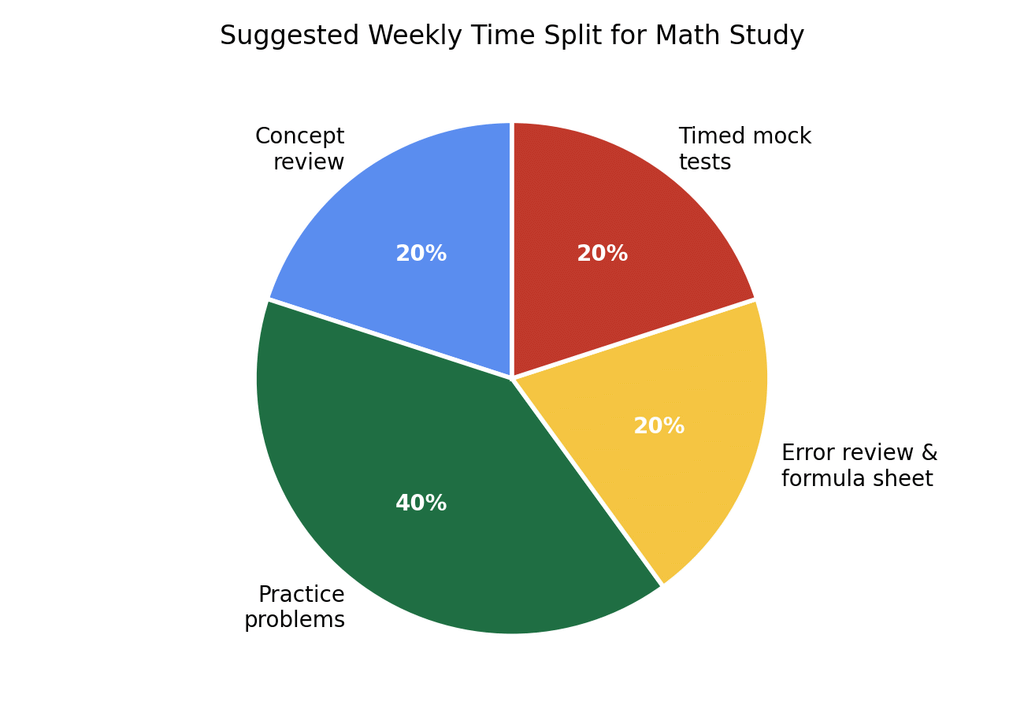
Yet, time is frequently the limiting factor here; thus, it is wise to have a relatively balanced distribution of activities rather than letting one activity outweigh all others, such as spending the whole week studying notes without bothering to do anything else. Thus, having a weekly schedule that involves more work on solving problems and analysing mistakes, and fewer concepts and timed tests, will be quite beneficial.
6. Simulate Exam Conditions Regularly
Knowledge of something and implementation of this knowledge are two different things. The very fact that you take your practice tests under the conditions of an actual exam (not having your notes, the countdown timer, etc.) lets you identify some flaws in terms of time management and lack of care, which are not revealed when taking the practice test without a timer. Such an analysis of your timed test, in the same way as any other practice test (writing down all your mistakes and reasons for them), is very likely to be the most significant part of your preparation process in the two weeks before the exam.
References
Ericsson, K. A., Krampe, R. T., & Tesch-Römer, C. (1993). The role of deliberate practice in the acquisition of expert performance. Psychological Review, 100(3), 363–406.
Rohrer, D., & Taylor, K. (2007). The shuffling of mathematics problems improves learning. Instructional Science, 35(6), 481–498.
Sweller, J. (1988). Cognitive load during problem solving: Effects on learning. Cognitive Science, 12(2), 257–285.
Dunlosky, J., Rawson, K. A., Marsh, E. J., Nathan, M. J., & Willingham, D. T. (2013). Improving students’ learning with effective learning techniques: Promising directions from cognitive and educational psychology. Psychological Science in the Public Interest, 14(1), 4–58.
National Council of Teachers of Mathematics. (2014). Principles to Actions: Ensuring Mathematical Success for All. NCTM.
AI Detection Report
- Plagiarism Report

- Proofreading Report