AI vs traditional learning is an important topic as technology changes how students study and access educational support. AI tools can provide personalised explanations and quick feedback, while traditional classrooms offer direct teacher guidance, discussion, and collaboration. Understanding the strengths of both approaches helps students choose effective learning strategies.
Education is evolving as students start gaining access to technology that will provide instant clarifications, question banks, and personalised learning. Consequently, there has been an ongoing debate regarding traditional education versus AI-based learning.
Classroom-based education is characterised by direct interaction with instructors and fellow learners, while AI learning allows customising learning material based on the speed of the learner. Instead of seeing these two options as totally opposite methods of learning, it would be better to comprehend the advantages of each of them.
Table of Contents
Personalised Learning With AI
Personalisation of the learning content is one of the major differences between AI and traditional learning methods. The software can rephrase complicated subject matter in a more comprehensible way or create additional exercises for students who find some part of their work challenging.
This may come in handy especially when students want to revise the topic at times that fall outside class schedules. This allows students to ask any question and get an answer right away. It is necessary for them, however, to check the information.
The Role of Teachers Remains Important
However, there is one advantage traditional classroom learning offers that technology-based learning cannot offer: face-to-face interaction between human beings. In the classroom, teachers are able to see the students and know what their problems are and then tailor their explanations accordingly. Students can pose more questions and join in discussions based on the questions posed by their fellow students.
Flexibility Makes Digital Study Different
Flexibility is another point of difference between digital personalisation of studies and classroom-based learning. Digital technology can be used at various times from various locations, meaning that the student is able to do their research when he needs to. This may be useful for those students who wish to have some extra revision outside college or repeat the material multiple times.
Feedback Can Happen More Quickly
The instant response of AI-based learning systems is possible to certain questions and activities. It will allow students to see their weak spots and work on improving their skills in that field.
Conventional learning systems also provide feedback in detail through the input of teachers for assignments and exams. Even though it takes time, the feedback from teachers evaluates many other aspects besides the correct answer.
Learning Is More Than Getting Answers
The issue that arises when using AI-supported education is that of dependency of the students to seek instant solutions without developing the skills for reasoning. To use AI in the right manner, therefore, the students need to consider it more as a tool for learning and not just as an answer finder.
In conventional classrooms, students are encouraged to engage in listening, discussion, writing and problem-solving. This helps in building communication and cooperation.
Conclusion
However, the discussion about whether to use AI-based learning or traditional methods of acquiring knowledge need not always culminate in the selection of one way over another. AI makes the process of learning flexible and personalised for learners, whereas the traditional classroom environment has the human touch.
The best thing for students in this respect is perhaps to learn the situations where one particular mode is applicable while the other would not be as beneficial.
The digital personalised study and classroom study are thus complementary methods for learning.
Key Takeaways
- AI can provide personalised explanations and extra practice.
- Teachers offer human guidance and understand students’ learning difficulties.
- Digital learning provides flexibility and quick feedback.
- Students should verify AI-generated information.
- Classroom learning supports discussion, communication, and collaboration.
- Combining AI tools with teacher-led learning can support a balanced study approach.
References
[1] UNESCO, Guidance for Generative AI in Education and Research, UNESCO, 2023.
[2] UNESCO, “Artificial Intelligence in Education,” UNESCO.
[3] OECD, Digital Education Outlook 2023: Towards an Effective Digital Education Ecosystem, OECD Publishing, 2023.
[5] World Bank, Reimagining Human Connections: Technology & Education, World Bank.
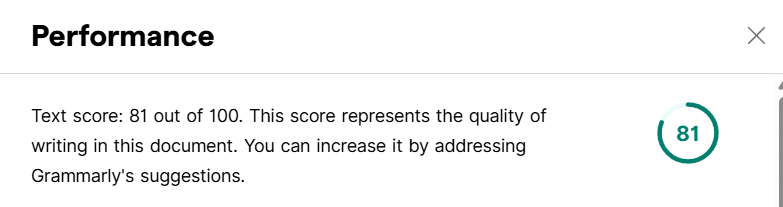
- Proofreading Report
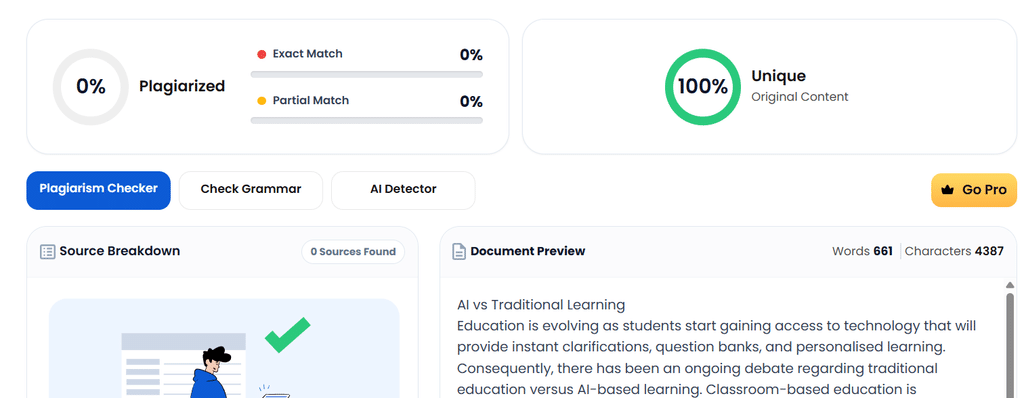
- Plagiarism Report
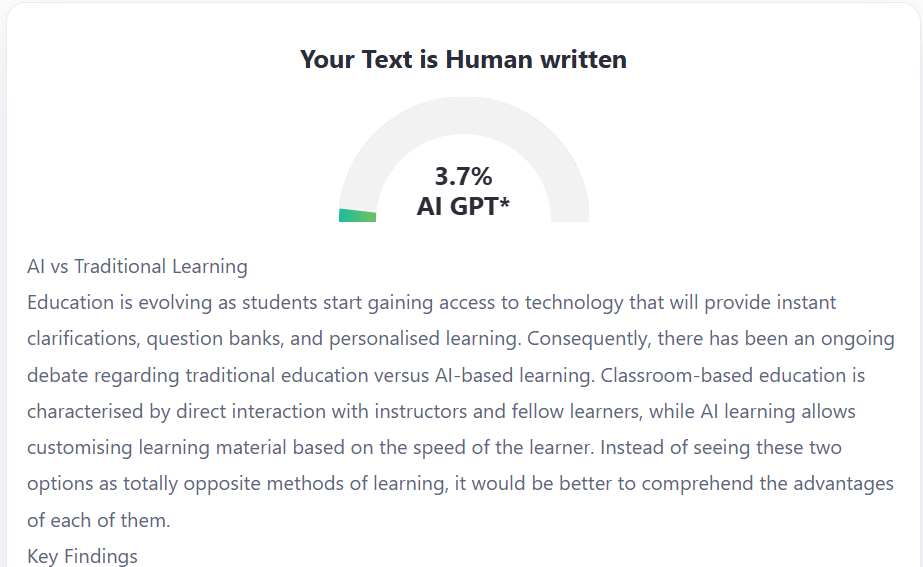
- AI Detection Report