
Focus tips like studying without phone distractions can help students improve concentration, save time, and achieve better results. Long hours of studying may not always lead to good results because many students spend hours over their textbooks but do not learn anything from them because of various factors, including distraction, tiredness, or lack of proper ways to study. The thing is to know how to concentrate when studying as it helps improve the effectiveness of studying and save some time. The secret is in the organization of the process of learning.
Why Is It Important to Focus When Studying?
It is important for one to be able to concentrate because the brain receives a possibility to process, understand, and memorize the obtained information. According to different studies, the more distracted the student is while studying, the lower is his/her possibility to succeed in the exam [1].
Focus Tips to Study Without Phone Distractions
1. Control Over Study Environment
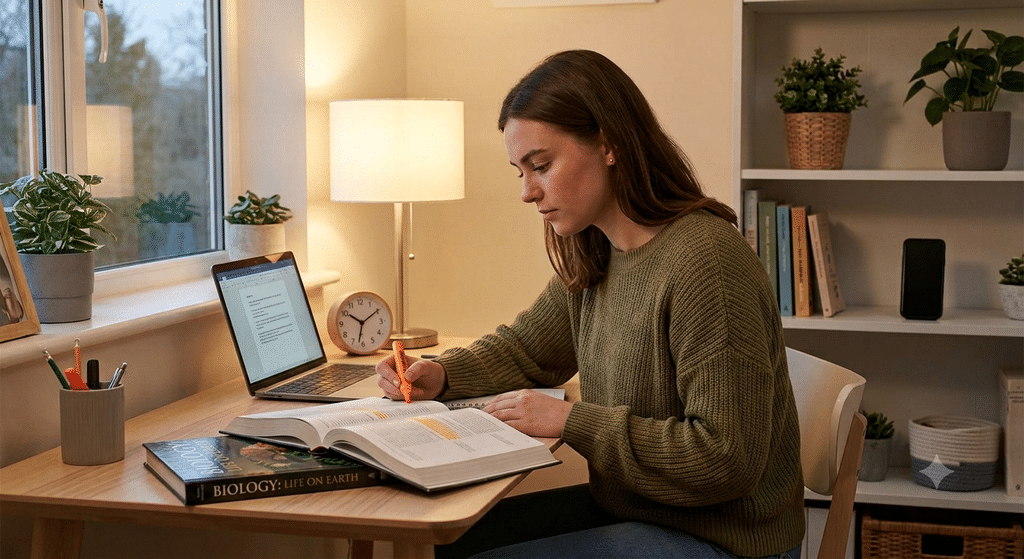
One of the simplest ways of focusing on a certain task is having control over the environment. Choose a well-lit and cozy place where you can work alone on the current task.
Amongst other things, your phone may well be one of the biggest distractions. Notifications, social media updates, and messages can easily make you lose track of the current task. Research indicates that there is a link between problematic use of smartphones and poor academic performance [2]. To avoid any such distractions when studying, switch off the phone and put it away from your desk of study. However, in case you need it for academic purposes, then switch off unnecessary notifications and use the app only.
2. Divide Your Study Sessions Into Smaller Blocks of Time
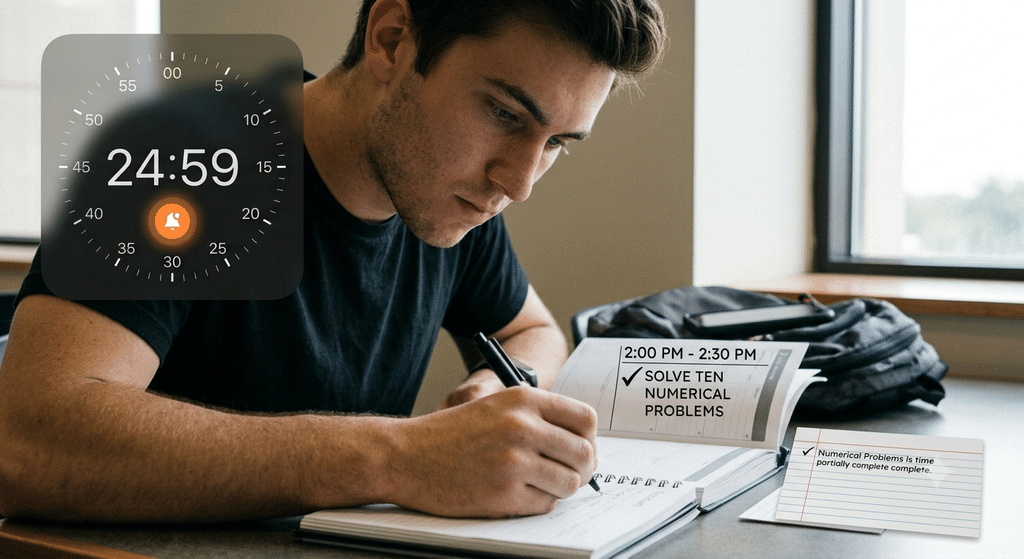
Among the most practical focus tips, active learning keeps your mind engaged and reduces wandering. Instead of spending long, uninterrupted hours on studying, it will be far more useful to divide them into smaller time blocks. For instance, 25 to 50 minutes of studying followed by small intervals after each study period.
Before beginning any study period, make up your mind about what you are going to do. Having a definite goal, such as “solve ten numerical problems” would be more helpful than “study economics.”
3. Active Learning
The strategy of revising by simply reading the chapter may not be the most productive one. The technique of active learning such as self-examination, problem solving, explaining something in your own words, or simply recalling something without any notes might be more useful.
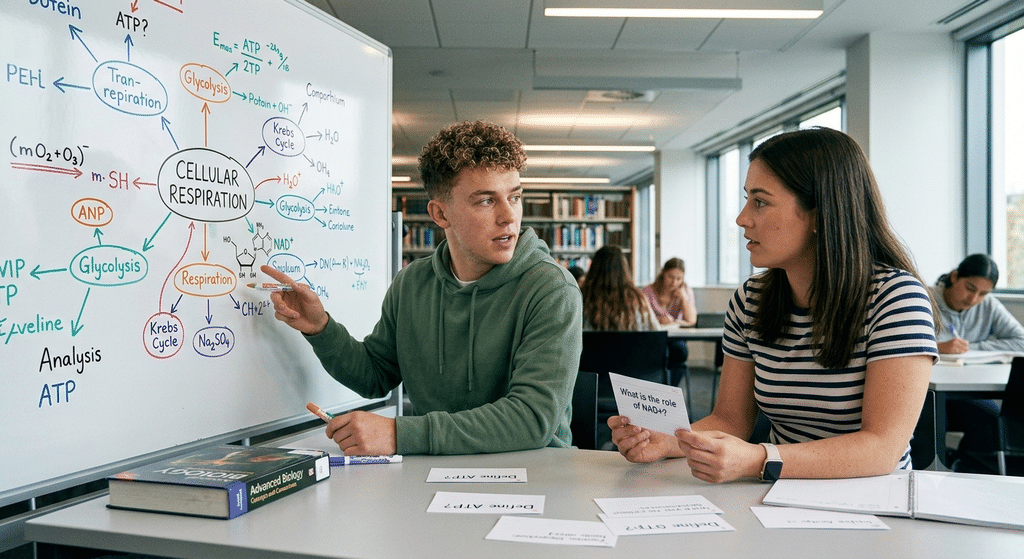
As per research studies, “retrieval practice was more effective for subsequent retention compared to restudying” [3]. It will help you stay focused and avoid any sort of mind wandering while studying [4].
4. Sleep Well and Get Enough Rest
In addition to the influence of the methods of studying on your ability to concentrate, your physical and psychological well-being is important. Insomnia may interfere with your capacity to concentrate. As per the CDC, proper sleep enables you to focus and concentrate [5].

It should be remembered that you shouldn’t deprive yourself of your sleep in order to learn throughout the night. Short breaks between your studies help to continue with your studies full of energy.
5. Make Concentration a Habit
Concentration takes time and cannot be acquired in a single day. You can start with something easy such as turning off your phone, focusing on only one task for the day, concentrating on periods and active recall, and sufficient amount of sleep.
It does not mean that you should avoid all distracting factors in order to always concentrate on your studies and learning. You should create a routine to facilitate the process of concentration.
References
[1] J. D. Geller et al., “To What Extent Do Study Habits Relate to Performance?” CBE—Life Sciences Education, vol. 20, no. 2, 2021. Available here (lse.ascb.org in Bing) (bing.com in Bing)
[2] A. Paterna et al., “Problematic smartphone use and academic achievement: A systematic review and meta-analysis,” Journal of Behavioral Addictions, vol. 13, no. 2, pp. 313–326, 2024. doi: 10.1556/2006.2024.00014. Available here (akademiai.com in Bing) (bing.com in Bing)
[3] K. B. McDermott and H. L. Roediger III, “Benefits from retrieval practice are greater for students with lower working memory capacity,” Memory & Cognition, 2016. Available here (springer.com in Bing) (bing.com in Bing)
[4] “Collaborative Retrieval Practice Reduces Mind-Wandering During Learning,” Open Mind, 2023. Available here (mitpressjournals.org in Bing) (bing.com in Bing)
[5] Centers for Disease Control and Prevention, “Sleep and Health,” Sep. 10, 2026. Available here (cdc.gov in Bing) (bing.com in Bing)