
Image: Chatgpt
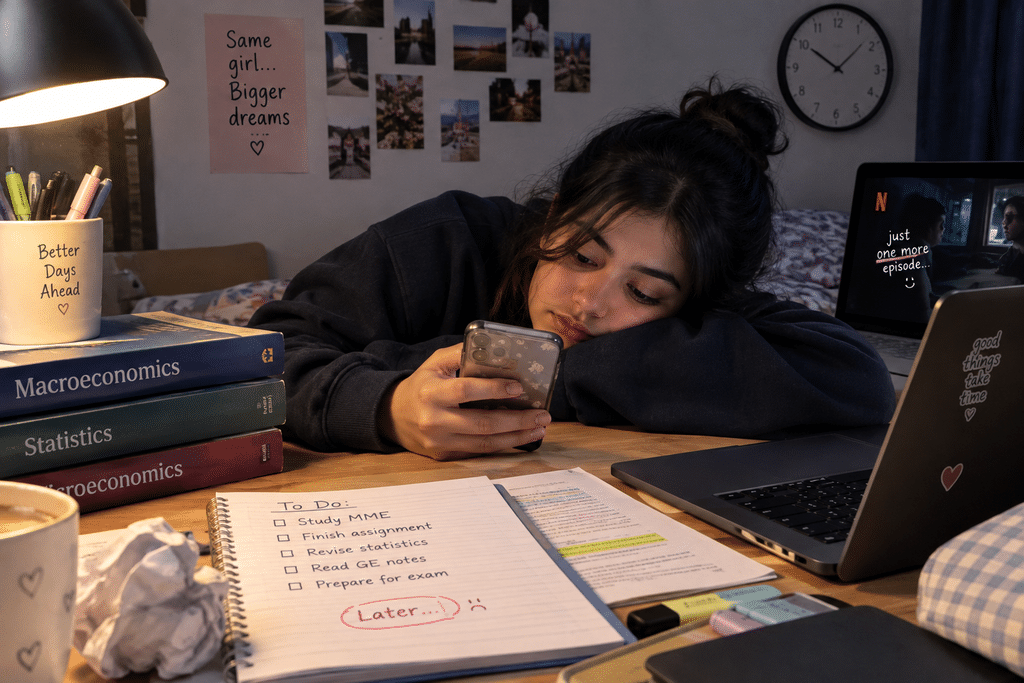
We want to study, but instead of doing that, we do everything. Procrastination is the voluntary and unnecessary delay of an intended task or goal. It has become a universal student issue, and no, it isn’t a simple sign of laziness; instead, it is often a failure in emotional self-regulation. Because of it, study focus, student productivity, and morale are hampered.
Although procrastination isn’t a mental health condition, according to the American Psychological Association, it can play a role in attention-deficit/hyperactivity disorder (ADHD), obsessive-compulsive disorder (OCD), and other conditions.
Students often know the consequences of procrastination, but still, they cannot make up their minds and beat distractions.
Why?
Multiple reasons are behind this problem.
Building Confidence to Improve Study Focus
FEAR OF FAILURE
One of the most prominent reasons for procrastination is the fear of failing. It’s like students don’t even want to try because they have forgotten that success and failure are both possibilities. Even losing can give you valuable experience.
LACK OF BELIEF
Fear of failure can happen because of a lack of belief and faith in our abilities. When self-efficacy is low, beginning a task can become tough.
PERFECTIONISM
Being perfect is an illusion, but unfortunately, it has become a symbol of the community. In this social media world, where everything and everybody’s life looks so perfect, chic, and managed, students feel unnecessary pressure to either do something perfectly from the start or not do it at all.
Now the question arises: how to stop procrastinating while studying?
Improve Study Focus with Better Time Management
TIME MANAGEMENT
Use the small-chunks technique. Instead of making huge to-do lists and scheduling every single minute, construct small units of realistic tasks that you can actually complete. This can make the workload feel manageable and give you more motivation.
Study & Academic Skills: Building the Best Study Timetable for Students
BE ACTIVE OR MOTIVATED
Whenever you feel like giving up, motivate yourself by giving pep talks to yourself or by switching to the same task in a more interesting way. Sometimes, a small change can help you regain your focus.
How to Beat Distractions While Studying
ELIMINATING DISTRACTIONS
Nowadays, there are several kinds of distractions, so putting your phone away and choosing a good location to study, like a library, café, or even a dedicated desk in a quiet place, can work really well.
BUILD BETTER HABITS
Try to work with others in a group to understand how others deal with problems. Studying with others can also help you stay accountable and make studying feel less overwhelming.
Rewards That Boost Student Productivity
REWARDS
At the end, try to reward yourself with something you genuinely enjoy, but only when your whole task is completed. This can give you something positive to look forward to after finishing your work.
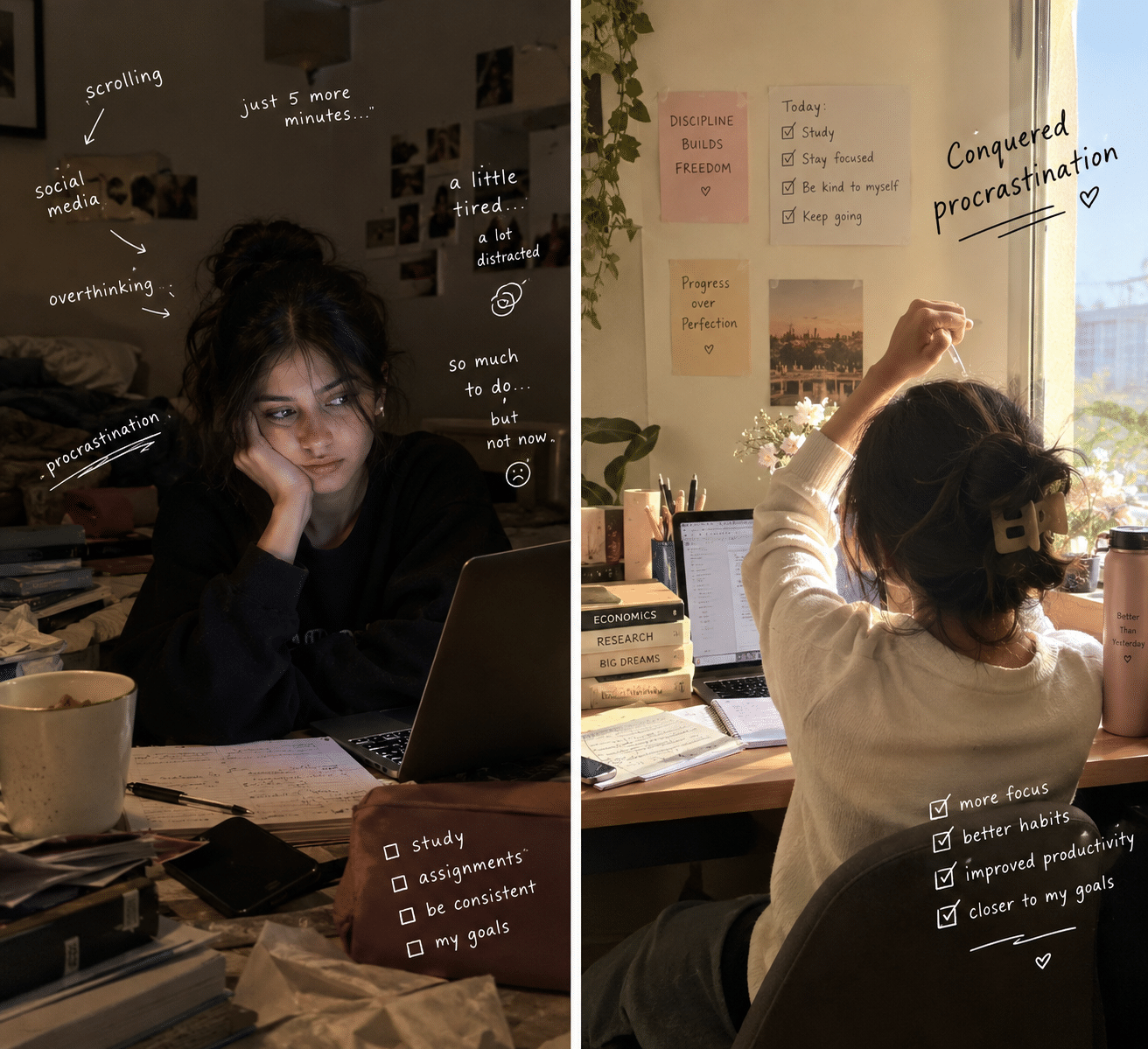
Image: Chatgpt
Procrastination in study life is valid and normal, but not dealing with it isn’t. A little motivation, belief in yourself, and ignoring distractions can help students conquer their dream academic era. The key is to start small, stay consistent, and remind yourself that process matters more than perfection.
FAQs
How can students improve study focus?
Students can improve study focus by breaking tasks into smaller chunks, setting realistic goals, and studying in distraction‑free environments like libraries or quiet study corners.
What are the best ways to beat distractions while studying?
To beat distractions, students should keep phones away, block social media during study hours, and choose a dedicated study space that minimizes interruptions.
How does procrastination affect student productivity?
Procrastination lowers student productivity by wasting valuable time, reducing motivation, and creating stress that impacts both academic performance and confidence.
Can rewards help boost student productivity?
Yes, rewards like short breaks, favorite snacks, or leisure activities after completing tasks can motivate students and make studying more enjoyable.
Why do students struggle with study focus despite knowing the consequences of procrastination?
Often, fear of failure, lack of confidence, or perfectionism distracts students from starting tasks. Recognizing these barriers and addressing them step by step helps maintain study focus.
References
- For reasons:https://share.google/biQJZ9eY8gjee4InB
- For ways: https://share.google/7J7ekfJfSDeZRZhsA