Meta description:Learn how AI is changing education through learning AI tutors, digital classrooms and new ways of supporting students and teachers.
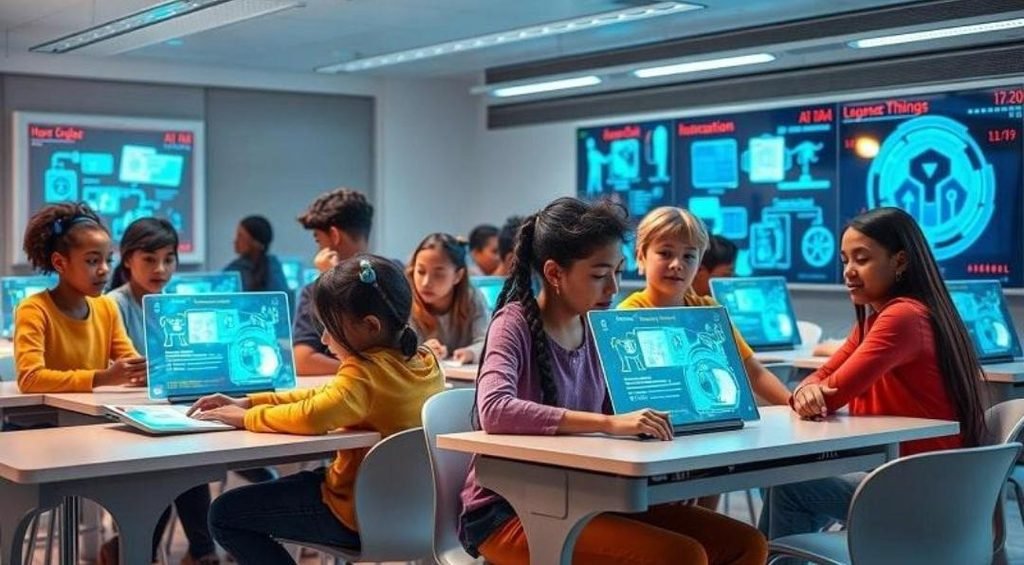
How AI is changing education can be seen in personalised learning, AI tutors, digital classrooms, and new ways to support teachers. These tools can help students practise concepts and access explanations, but human guidance and fact-checking remain essential.
Artificial intelligence has started changing parts of our daily lives and education is one of them. Students today can use AI tools to find explanations, practise questions, generate ideas and even get help with topics. Teachers can also use these tools while preparing lessons or creating learning material. Because of this the way people study and teach is slowly changing.
Table of Contents
Learning at Your Own Pace
One of the changes AI can bring to education is personalized learning. In a classroom a teacher has to teach a group of students together even though everyone may understand a topic differently. Some students may need examples while others may be ready to move to a harder topic.
AI-based learning platforms can use a student’s answers and progress to suggest suitable exercises. For instance if a student keeps getting questions in a particular topic the system may provide more practice or another explanation. This can make studying more flexible. Give students a chance to work at a pace that suits them.
AI Tutors for Students
Another growing use of AI is through AI tutors. These tools can explain a concept, answer questions, create practice tests or help a student revise before an exam. This can be useful when a student is studying alone and needs help.
However AI is not always correct. It can give an answer that sounds convincing. Is actually wrong. Students therefore still need to check information and use textbooks, teachers and reliable sources. UNESCO has also highlighted the need for a human-centred approach when using AI in education.
How Teachers Can Use AI
AI can be useful for teachers well. Preparing worksheets, quiz questions and basic learning activities can take time. Some AI tools can help teachers create a version of these materials, which they can then edit according to their students requirements.
This does not mean that teachers become less important. In fact teachers still have to decide whether the information is suitable, explain ideas and understand the individual problems faced by students. The U.S. Department of Education has similarly discussed AI as a tool that can support teaching and learning while keeping humans involved in educational decisions.
The Future Classroom
The future classroom may look different from the classroom students are familiar with. By using technology only for watching videos or making presentations students may regularly use AI-based tools for practice, research and feedback.
A classroom could include students working on activities based on their learning needs while the teacher moves around and provides guidance. This could make technology a regular part of learning than something used only occasionally.
Challenges of Using AI in Education
The increasing use of AI also creates some concerns. Students may become too dependent on AI for their assignments of developing their own thinking and writing skills. There are also questions about privacy, incorrect information, unequal access to technology and the possibility of bias in AI systems.
UNICEFs updated guidance on AI and children stresses areas such as safety, privacy, fairness, transparency and inclusion. It also points to the importance of preparing children with the skills needed to understand and use AI responsibly.
Conclusion
How AI is changing education is not simply about replacing books or teachers with technology. It is about adding tools to the learning process. Personalized learning can give students flexible practice. AI tutors can provide quick study support and teachers can use AI for some routine tasks. At the time students need to learn how to question AI-generated information and use these tools responsibly. The future of education will likely depend on finding a balance between technology and human teaching.
References
- UNESCO. “Guidance for Generative AI in Education and Research.” 2023. UNESCO official source
- U.S. Department of Education. “Artificial Intelligence and the Future of Teaching and Learning.” U.S. Department of Education official source
- UNICEF. “Guidance on AI and Children: Version 3.0.” UNICEF official source
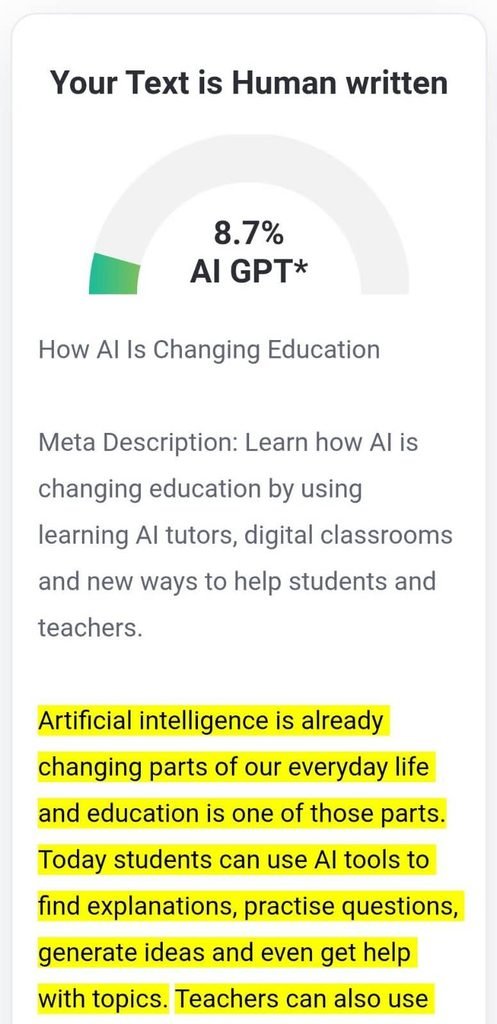
AI Detection Score:
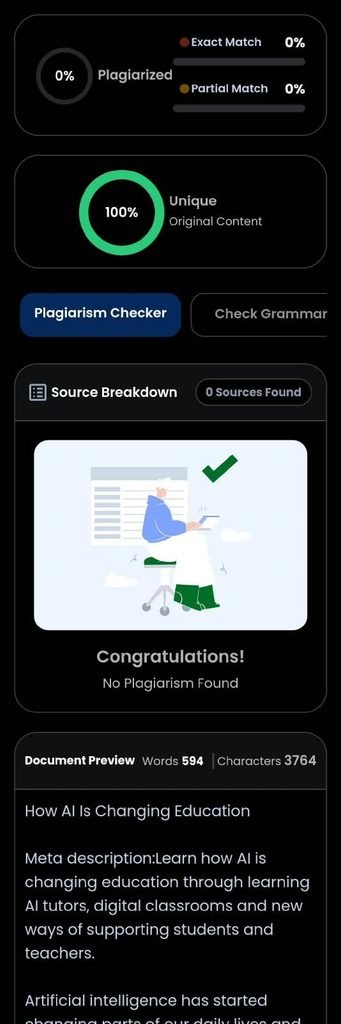
Plagiarism Score:
Grammarly Score: