
Source: Laureateshimla
Table of Contents
Introduction
CBSE Class 12 board exam preparation becomes especially important as the February 2027 examination period approaches. Students need to complete their remaining syllabus, revise important concepts, practise sample papers, and prepare for practical examinations. Without a clear plan, balancing these responsibilities can become stressful.
A well-organised study schedule can make preparation more manageable. Instead of following someone else’s timetable, students should create a routine based on their subjects, school hours, learning needs, and areas that require improvement. With consistent effort and realistic daily targets, students can approach their board examinations with greater confidence.
1. Start by Planning Your Study Time
Before creating a timetable, identify how much of the syllabus you have completed and which chapters still need attention.
Make a subject-wise checklist and divide topics into three groups:
- Completed topics: Chapters that need only regular revision.
- Partially completed topics: Chapters that require additional study and practice.
- Difficult topics: Areas that need more time, teacher guidance, or repeated practice.
Allocate more time to subjects and chapters that require additional effort. Subjects involving regular problem-solving, such as Mathematics, Accountancy, Physics, and Chemistry, may need consistent daily practice.
Set realistic targets for each study session. Completing a few topics properly is more useful than trying to cover too many chapters without understanding them.
2. Follow a Simple Daily Timetable for Class 12 Students
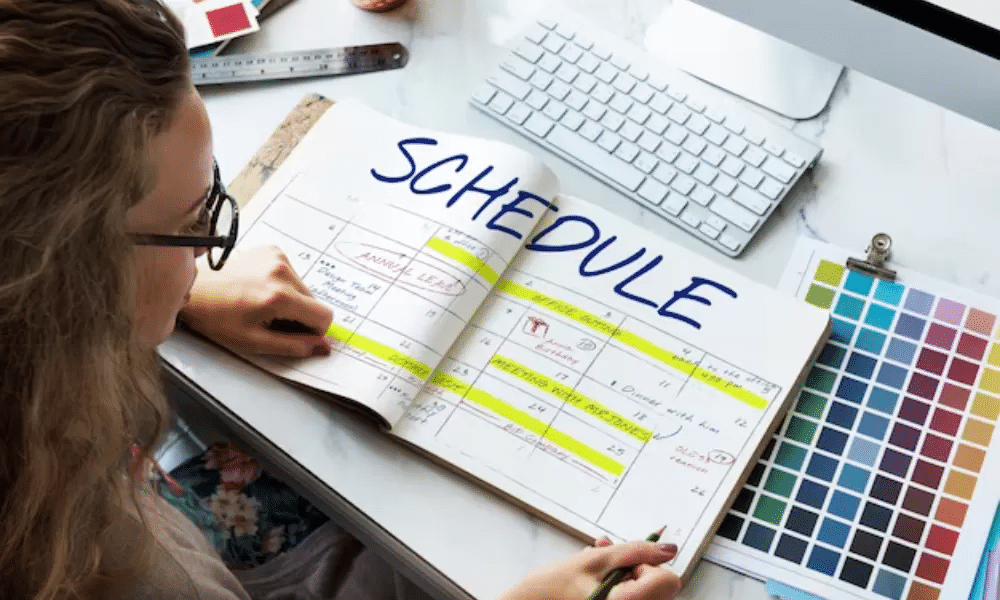
A daily timetable does not need to be complicated. It should balance study sessions, breaks, meals, school hours, and rest.
Here is an example that students can adapt to their individual routines:
| Time | Study activity |
|---|---|
| 6:30 AM – 7:30 AM | Revise the previous day’s topics |
| 4:00 PM – 5:00 PM | Study a difficult subject |
| 5:00 PM – 5:30 PM | Take a break |
| 5:30 PM – 6:30 PM | Practise questions or numerical problems |
| 7:30 PM – 8:30 PM | Study another subject |
| 8:30 PM – 9:00 PM | Dinner and rest |
| 9:00 PM – 9:45 PM | English or theory revision |
| 9:45 PM – 10:00 PM | Plan the next day’s targets |
Students can adjust these timings according to their school schedule, tuition classes, and personal study habits. Those who attend school in the morning or evening should rearrange the sessions rather than trying to follow the example exactly.
The main objective is to maintain a balanced routine without becoming exhausted.
3.CBSE Class 12 Board Exam Preparation: Subject-Wise Strategies
Every stream has different subjects and learning requirements. Students should adjust their preparation methods according to the subjects they have chosen.
Science Stream
Students studying Physics, Chemistry, Mathematics, or Biology should balance conceptual understanding with regular practice.
- Physics: Understand formulas, practise numerical problems, and revise important concepts and derivations.
- Chemistry: Focus on chemical reactions, equations, concepts, and numerical problems. Practise questions regularly.
- Mathematics: Solve problems consistently, revise formulas, and work through textbook exercises and sample questions.
- Biology: Revise textbook chapters, important definitions, diagrams, and biological processes. Practise drawing and labelling diagrams accurately.
Commerce Stream
Commerce students should focus on understanding concepts, practising calculations, and learning how to present answers clearly.
- Accountancy: Practise numerical problems regularly, understand accounting principles, and revise important formats and adjustments.
- Business Studies: Prepare concise notes, understand management concepts, and practise answers using relevant terminology.
- Economics: Revise definitions, diagrams, numerical questions, and important economic concepts.
- Mathematics or Applied Mathematics: Practise formulas and problem-solving questions consistently if the subject is part of the student’s combination.
Regular practice is particularly important for calculation-based subjects. Students should review incorrect answers to understand the concepts behind their mistakes.
Humanities Stream
Students studying History, Political Science, Geography, Psychology, Sociology, or related subjects should focus on understanding chapters and organising information for revision.
Prepare short notes for important concepts, events, dates, and definitions. Practise long-answer and short-answer questions to improve clarity and structure.
Students studying Geography should also spend time practising map-based questions and understanding diagrams. For subjects involving case studies or source-based questions, practise interpreting the given information before writing answers.
English for All Streams
English should not be left until the final weeks. Read the prescribed literature chapters, revise important themes and characters, and practise grammar and writing formats.
Students should also solve reading-comprehension exercises and practise writing tasks within the suggested time. Regular practice can improve vocabulary, clarity, and answer presentation.
4. Make Time for Sample Papers and Practical Examinations
Once you have covered the relevant syllabus, start solving CBSE sample question papers. These papers help students understand the examination pattern, question types, and expected time management.
Use the official CBSE sample papers and marking schemes for the 2026–27 academic session. Attempt each paper within the prescribed time limit and review your answers afterwards.
Pay attention to:
- Questions where you lose marks.
- Topics that require additional revision.
- Time spent on each section.
- Missing steps, explanations, or keywords.
- Presentation and answer-writing techniques.
Students should also prepare for practical examinations, projects, and practical files according to their subjects and school instructions. Complete records and project work on time rather than leaving everything until the examination period.
5. Keep the Last Few Weeks for Revision
As the February 2027 examination period approaches, shift your attention towards revision and practice.
Avoid collecting unnecessary books or starting multiple new resources at the last minute. Instead, use your existing notes, textbooks, formula sheets, sample papers, and previous practice tests.
Give additional attention to topics where you repeatedly make mistakes. Revise important definitions, diagrams, formulas, dates, and concepts at regular intervals.
Students should also follow official CBSE announcements and school communications regarding practical examinations, admit cards, and the final board examination timetable. Do not depend only on unofficial social media updates for examination information.
6. Track Your Progress and Improve Weak Areas
A timetable is useful only when students review their progress. At the end of each week, check which chapters have been completed and which topics still need attention.
Maintain a simple progress tracker with three categories:
- Completed: Topics that you understand and can answer questions about.
- Needs revision: Topics that you understand but occasionally forget.
- Needs more practice: Topics where you struggle with concepts or questions.
Use this tracker to plan the following week’s study sessions. If a topic remains difficult, seek help from teachers or classmates instead of repeatedly studying it without resolving the confusion.
7. Maintain a Healthy and Consistent Study Routine
Board exam preparation should not come at the cost of physical and mental well-being. Long, uninterrupted study sessions can make it difficult to maintain concentration.
Take short breaks, eat regular meals, stay hydrated, and maintain a consistent sleep schedule. Avoid comparing your study hours with those of your friends. Each student has a different learning speed and set of responsibilities.
Focus on completing realistic daily targets and maintaining steady progress. A balanced routine is easier to follow over several weeks than an exhausting timetable.
Frequently Asked Questions
1. How can I prepare for CBSE Class 12 board exams before February 2027?
Start by checking your syllabus, identifying difficult chapters, and preparing a realistic timetable. Allocate time for revision, sample papers, and practical examinations.
2. How many hours should a Class 12 student study every day?
There is no fixed number of hours for everyone. Students should create a routine that allows them to complete their daily targets while maintaining sufficient rest and concentration.
3. When should I start solving CBSE Class 12 sample papers?
Start practising chapter-wise questions while completing the syllabus. Once you have covered the major topics, begin attempting full-length sample papers under timed conditions.
4. How should Commerce students prepare for Class 12 board exams?
Commerce students should practise Accountancy regularly, understand Business Studies concepts, revise Economics, and solve Mathematics or Applied Mathematics questions if applicable.
5. How can Science students improve their board exam preparation?
Science students should balance theory and numerical practice. They should revise Physics formulas, Chemistry reactions, Mathematics problems, and Biology diagrams and concepts according to their subject combination.
6. Is it important to prepare for practical examinations separately?
Yes. Students should complete practical records, projects, experiments, and other subject-related requirements according to their school’s instructions.
7. What should students do during the final weeks before board exams?
Focus on revision, sample papers, important concepts, and correcting previous mistakes. Avoid unnecessary new resources and follow official examination updates.
8. Where can I find the official CBSE Class 12 sample papers for 2027?
Students can visit the CBSE Academic website and access the Class XII sample question papers and marking schemes for the 2026–27 academic session.
Conclusion
Effective CBSE Class 12 board exam preparation depends on planning, regular revision, and consistent practice. Students should complete their remaining syllabus, follow a realistic timetable, practise sample papers, and prepare for practical examinations well in advance.
There is no single timetable that works for everyone. Adjust your study routine according to your subjects, school schedule, and areas that need improvement. Instead of waiting until the final few weeks, make steady progress every day. With organised preparation, adequate rest, and regular practice, students can approach the 2027 board examinations with greater confidence.027. Importantly stay consistent. Do not wait until the few weeks to start studying. When you make a timetable, you will feel more prepared, for your board exams.
References
1] Central Board of Secondary Education (CBSE), “Class XII Sample Question Papers and Marking Schemes, 2026–27.” [Online]. Available: https://cbseacademic.nic.in/SQP_CLASSXII_2026-27.html
[2] Central Board of Secondary Education (CBSE), “Curriculum for the Academic Year 2026–27.” [Online]. Available: https://cbseacademic.nic.in/curriculum_2027.html
[3] Central Board of Secondary Education (CBSE), “Examination Circulars.” [Online]. Available: https://www.cbse.gov.in/cbsenew/Examination_Circular.html