
Table of Contents
Introduction
Career upskilling is becoming increasingly important as job requirements continue to change. New technologies, changing business needs, and evolving workplace expectations are influencing the skills employers look for when hiring.
For students, fresh graduates, and working professionals, keeping up with these changes is an important part of career growth. Skills development no longer happens only during formal education or training. It requires continuous learning, practical experience, and an understanding of what employers currently expect.
One useful way to identify learning priorities is by regularly reviewing job descriptions. These listings provide insights into the technical abilities, communication skills, qualifications, and practical experience required for different roles. By understanding these expectations, individuals can make better decisions about career upskilling and prepare themselves for future opportunities.
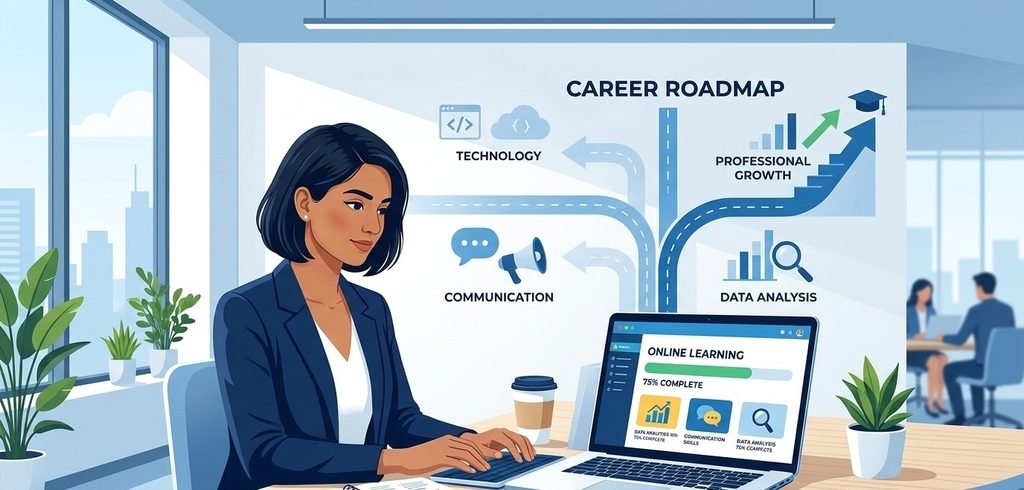
SOURCE: GEMINI AI
1. Regularly Review Job Descriptions
Regular career upskilling helps individuals identify changing employer expectations before they affect their job opportunities
Job descriptions are among the simplest resources for understanding changing workplace requirements. They explain what employers expect from candidates and often highlight skills that are becoming important within a particular industry.
Instead of looking at only one vacancy, review several job listings for similar positions. For example, someone interested in data analytics may notice repeated requirements such as Excel, SQL, data visualisation, and basic programming.
Create a list of frequently mentioned skills and compare them with your existing abilities. This can help identify areas where additional learning may be useful.
Reviewing job descriptions every few months also helps individuals notice changes in employer expectations and avoid spending time learning skills that are less relevant to their career goals.
2. Identify Industry Skills for Effective Career Upskilling
Not every new skill is useful for every profession. The abilities required for a marketing role may differ significantly from those needed in finance, technology, research, or human resources.
Start by understanding the direction in which your chosen industry is moving. For example:
- Marketing: Digital marketing, content strategy, analytics, and customer research.
- Finance: Financial modelling, Excel, data analysis, and financial technology awareness.
- Technology: Programming, cybersecurity, cloud computing, and artificial intelligence.
- Business development: Communication, negotiation, sales strategy, and customer relationship management.
- Research: Data interpretation, statistical tools, report writing, and research methods.
Understanding industry-specific requirements makes skills development more focused. It also helps individuals connect their learning activities with realistic career opportunities.
3. Build Both Technical and Soft Skills
Technical knowledge is important, but employers also value the ability to communicate, collaborate, solve problems, and adapt to new situations.
Technical skills may include using software, analysing data, managing digital platforms, or working with specialised tools. Soft skills include teamwork, critical thinking, time management, leadership, and communication.
For example, a data analyst may understand how to use spreadsheets and visualisation tools, but presenting findings clearly is equally important. Similarly, a business development professional may understand sales techniques but also needs strong listening and relationship-building skills.
A balanced approach to career upskilling helps individuals become more adaptable and effective in different professional environments.
4. Use Online Courses and Learning Platforms
Choosing relevant courses is an important step in an effective career upskilling plan.
Online learning has made professional development more accessible. Individuals can explore new subjects, improve existing abilities, and earn certificates without necessarily enrolling in a full-time programme.
Some useful platforms include:
- Coursera: Offers courses and professional certificates across business, technology, and data-related fields.
- edX: Provides online learning programmes from universities and educational institutions.
- LinkedIn Learning: Covers professional skills, workplace tools, communication, and management.
- Google Skillshop: Provides training related to Google’s digital products and advertising tools.
- Microsoft Learn: Offers learning resources for Microsoft technologies, data, and cloud-related skills.
Before enrolling in a course, check whether its content matches the requirements of your target roles. Completing several unrelated courses may be less useful than developing a smaller number of relevant skills in depth.
5. Apply New Skills Through Practical Projects
Learning a concept is only the first step. Applying it through practical work helps individuals understand how a skill is used in real situations.
For example, someone learning data analysis could work with a publicly available dataset, organise the information, identify patterns, and create a simple dashboard. A student interested in marketing could develop a sample campaign, prepare content, and analyse its potential audience.
Practical projects can help individuals:
- Understand how theoretical knowledge works in real situations.
- Identify areas that require further improvement.
- Build confidence through hands-on experience.
- Create examples of their work for a professional portfolio.
- Demonstrate skills beyond certificates and qualifications.
Internships, volunteering, college projects, and independent assignments can also provide opportunities to practise newly acquired abilities.
6. Stay Updated With Industry Trends and Technology
New technologies and changing business practices can influence the skills required across different professions. Artificial intelligence, automation, digital platforms, and data-driven decision-making are examples of developments affecting multiple industries.
Staying informed does not mean learning every new tool or following every trend. Instead, focus on understanding which developments are relevant to your field.
You can do this by reading industry publications, following professional organisations, attending webinars, and participating in relevant online communities.
It is also useful to observe how professionals in your target roles are using new technologies. This can help you distinguish between temporary trends and skills that may have longer-term value.
7. Review Your Progress and Update Your Career Plan
Skills development becomes more effective when progress is reviewed regularly. Without a clear plan, individuals may collect certificates without understanding how much they have actually learned or whether their skills match their career goals.
Set realistic learning targets and review them every few months. For example, you may aim to improve spreadsheet skills, complete an introductory course in data analysis, or develop a practical project using a new tool.
A simple progress review can include:
- Skills you already possess.
- Skills frequently requested in your target job descriptions.
- Areas where you need further training.
- Courses or projects completed.
- Practical examples you can add to your portfolio.
This process helps individuals identify gaps and adjust their learning priorities as professional requirements change.
Conclusion
Keeping your skills relevant requires more than occasionally enrolling in a course. It involves understanding industry expectations, identifying useful learning opportunities, and applying new knowledge through practical experience.
Regularly reviewing job descriptions can provide a realistic picture of what employers are looking for. Combined with online learning, hands-on projects, and consistent progress reviews, this approach makes career upskilling more focused and manageable.
As workplaces continue to evolve, individuals who remain open to learning and adapting will be better prepared to explore new responsibilities and professional opportunities. The goal is not to learn everything at once, but to develop the right skills at the right time.
References
[1] World Economic Forum, “The Future of Jobs Report 2025,” Jan. 2025. [Online]. Available: https://www.weforum.org/publications/the-future-of-jobs-report-2025/
[2] LinkedIn Learning, “Workplace Learning Report 2025.” [Online]. Available: https://learning.linkedin.com/resources/workplace-learning-report
[3] Coursera, “Online Courses and Professional Certificates.” [Online]. Available: https://www.coursera.org/
[4] Microsoft Learn, “Explore Training and Learning Paths.” [Online]. Available: https://learn.microsoft.com/en-us/training/